Quick summary
- Garibaldi Lake has no road to its shore, so every visitor arrives either on foot from the Rubble Creek trailhead or by air.
- Reaching the lake on foot means a long uphill hike from Rubble Creek, with no road at any point along the way.
- Harbour Air flies a scenic loop from Whistler over Garibaldi Lake and the Black Tusk, taking about thirty minutes.
- The trail puts you at the shore among the trees, and the flight shows you the whole basin from above; neither one replaces the other.
Is there a road to Garibaldi Lake?
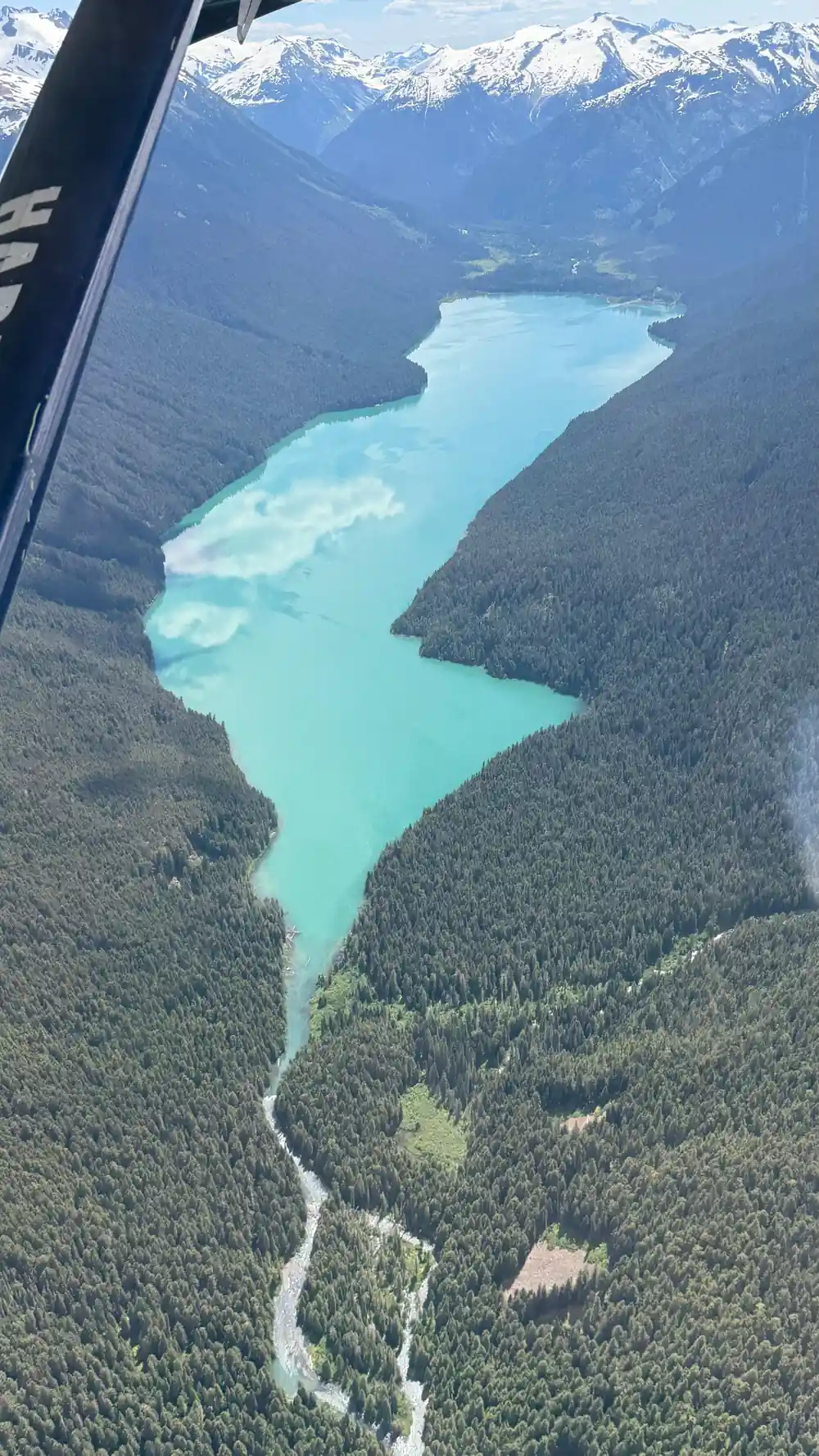
There is no road to Garibaldi Lake. The lake lies inside Garibaldi Provincial Park in British Columbia's Coast Mountains, and a wall of volcanic rock called the Barrier dams it into its basin. The water above that dam runs a striking turquoise, vivid enough that photographs of it can look retouched when they are not. No paved or gravel road crosses that wall, and the Barrier and the terrain around it are exactly why a vehicle has never reached the shore.
Because no road reaches the shore, everyone who wants to stand at the lake or fly over it starts from one of two points: the Rubble Creek trailhead on the ground, or the Harbour Air terminal on Green Lake in Whistler for those going by air. Those are the only two starting points that exist; there is no third route in. Which one a visitor picks decides everything else about the day, from how much walking is involved to how much of the basin comes into view.
What the hike from Rubble Creek involves
The hike to Garibaldi Lake begins at the Rubble Creek trailhead and is a long uphill walk with no road at any point. It is entirely on foot from the car park to the water, climbing the whole way rather than levelling off partway. Nothing about the route is flat, and nothing shortens it; the trailhead is the only place a vehicle can leave you before the walking starts.
What that walk buys you is arrival at the shore itself: standing at the water's edge, under the trees, with the Barrier close overhead and time to sit there rather than pass through. A trail does what a flight cannot, which is put you physically inside the place, close enough to hear the water and feel the air change as the trees open onto the lake.
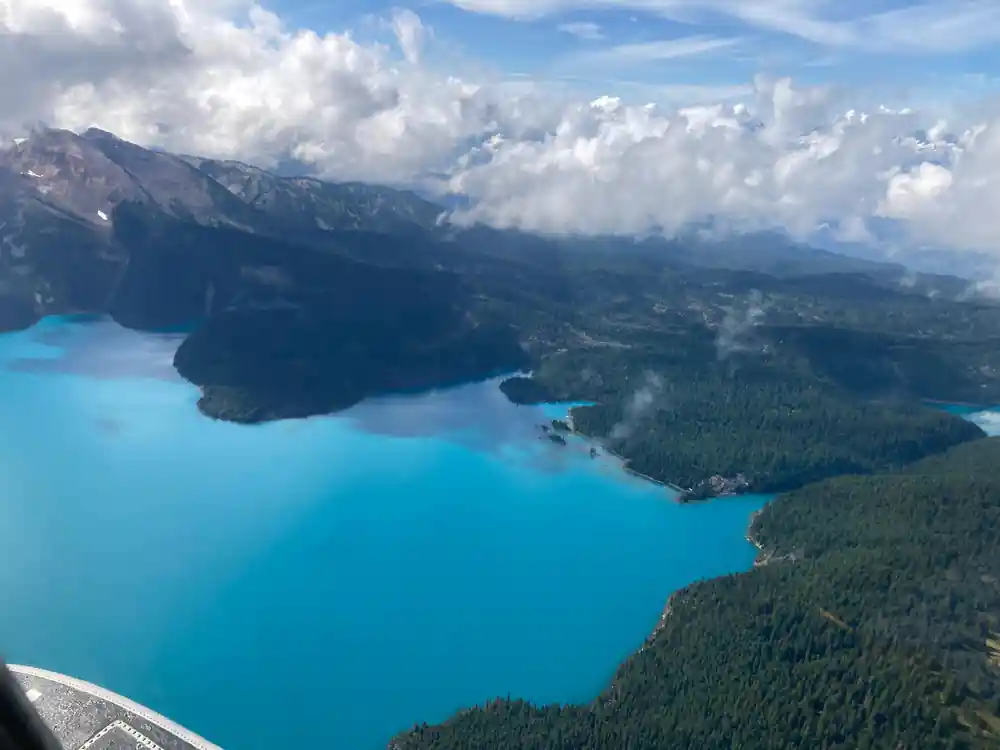
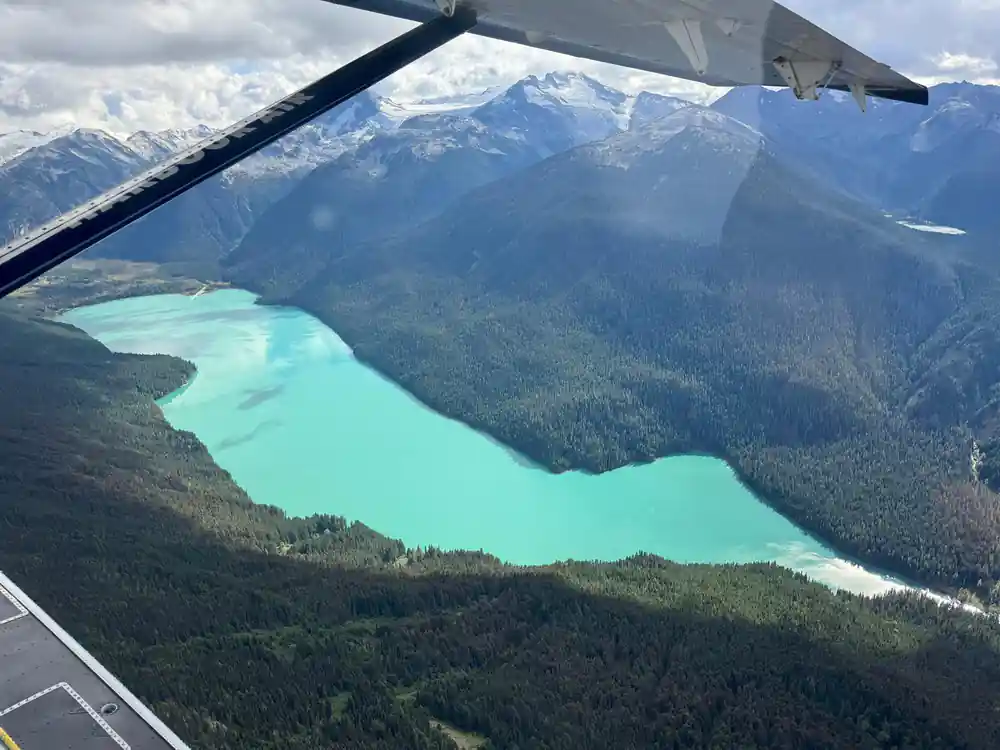
Garibaldi Lake and the Black Tusk, seen together from the air.
Seeing the lake without hiking
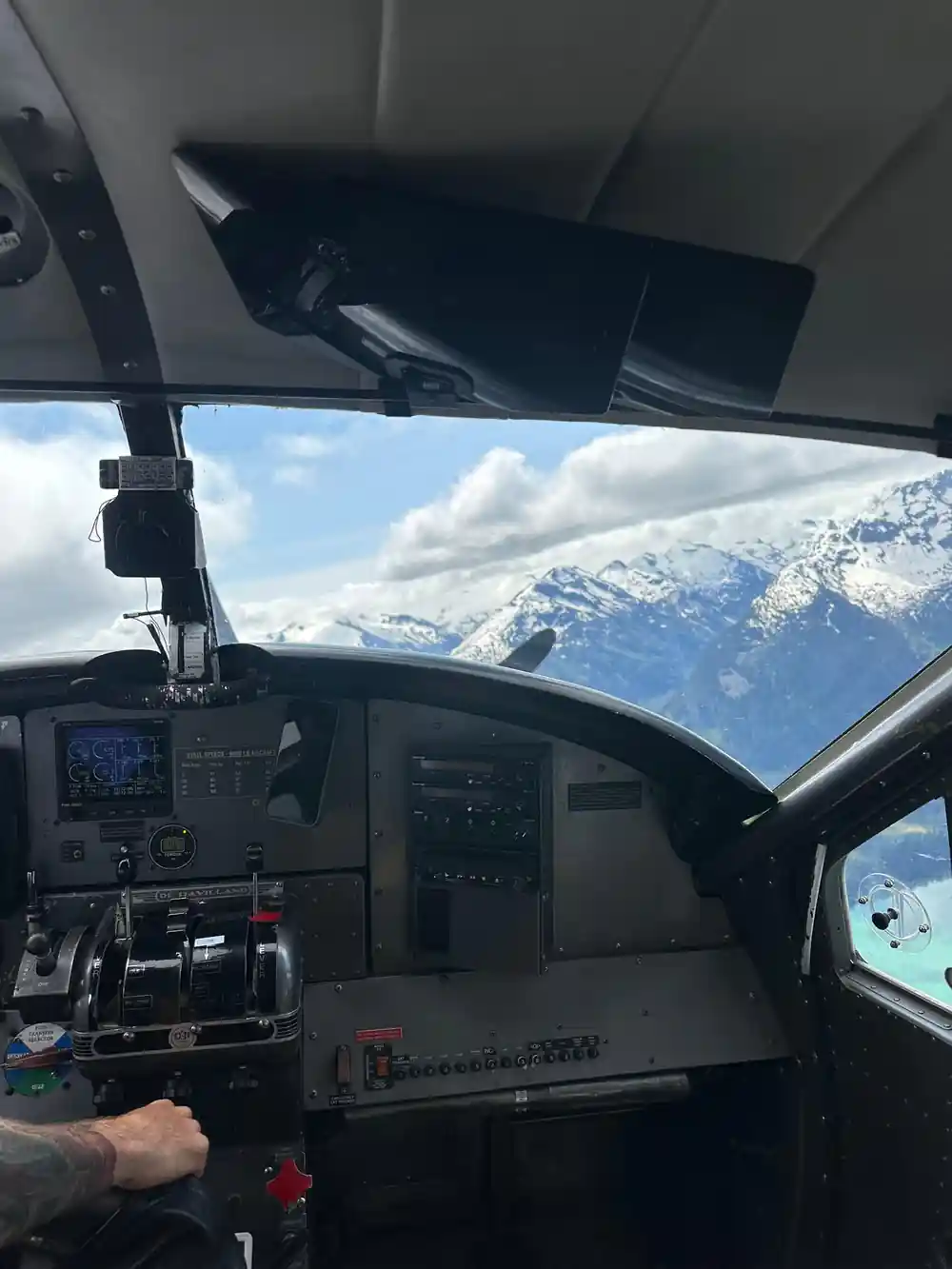
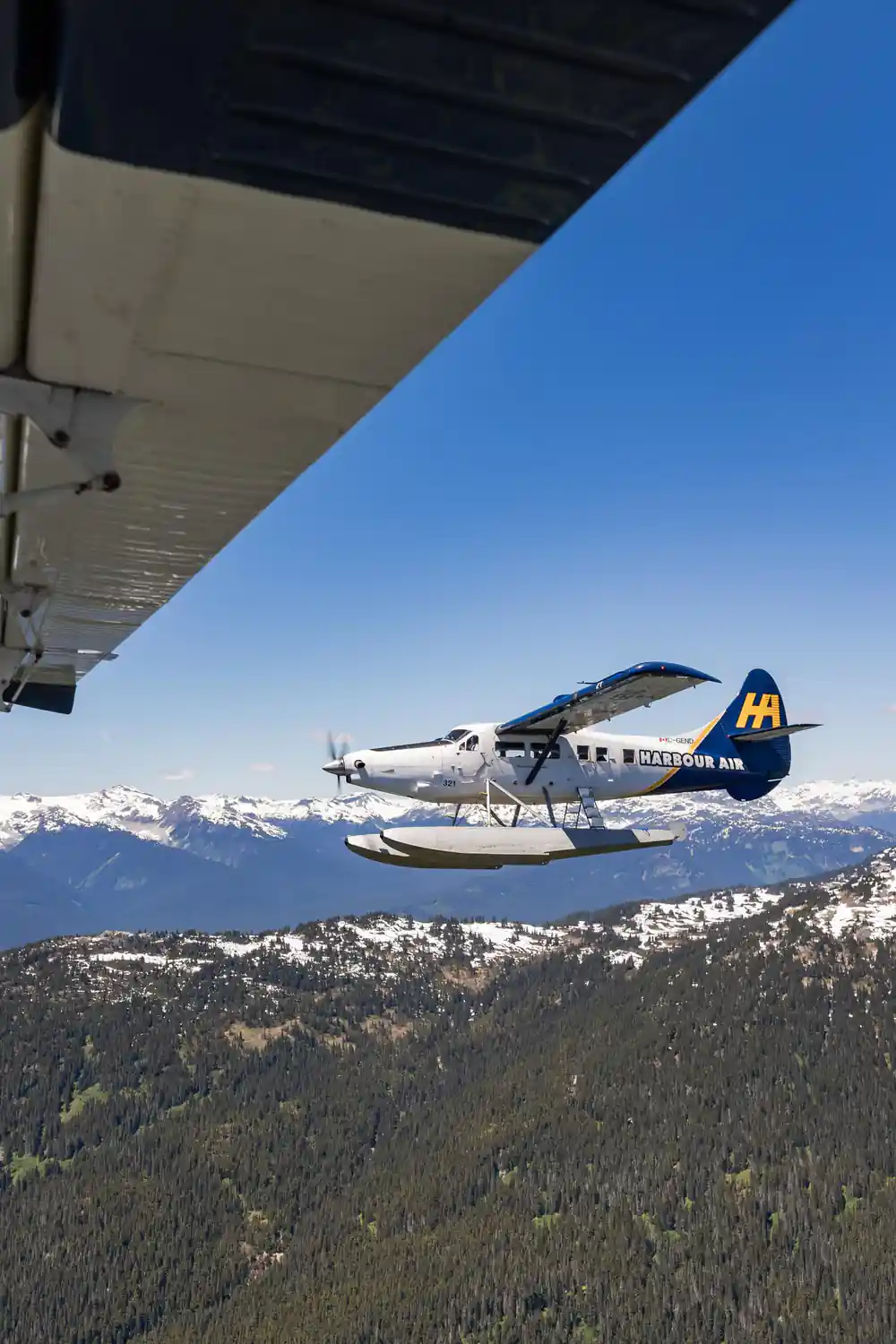
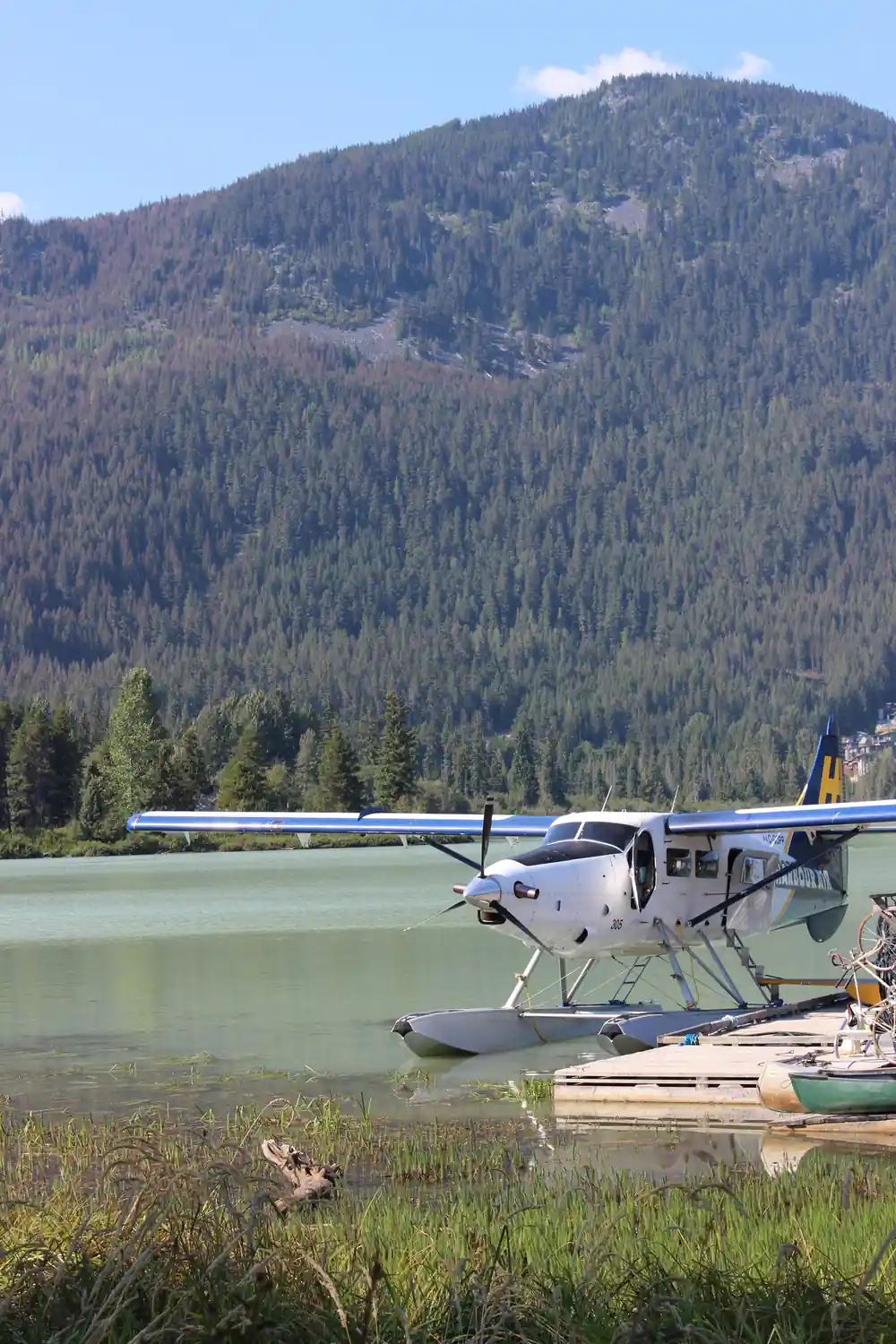
Harbour Air operates a scenic seaplane trip from its terminal on Green Lake, next to the Nicklaus North golf course in Whistler, out over Garibaldi Lake and the Black Tusk. The floatplane lifts off the lake, circles the route, and touches back down at the same dock roughly thirty minutes later. Passengers check in at the Harbour Air counter at least forty minutes before departure and need a passport or ID card at that counter.
This is a scenic outing rather than transport from one place to another. Separately, Harbour Air operates timetabled seaplane routes linking Vancouver, Victoria and Whistler for people travelling between those cities; this trip has nothing to do with that network and returns to the same Whistler dock it left from. Free cancellation is available. The flight is not an automatic answer for anyone hoping to avoid the hike on mobility grounds either: the operator does not list it as suitable for passengers with mobility impairments.
What thirty minutes in the air shows you
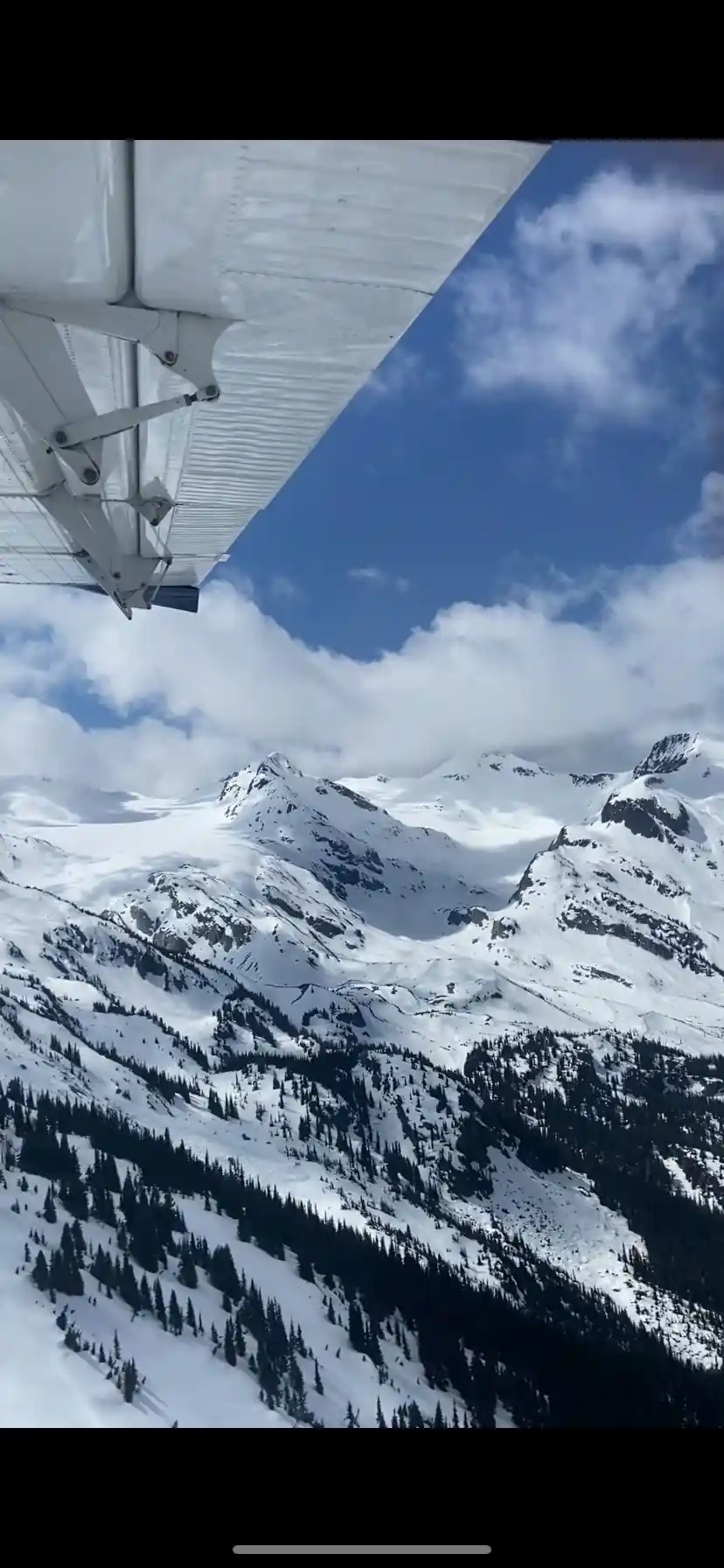
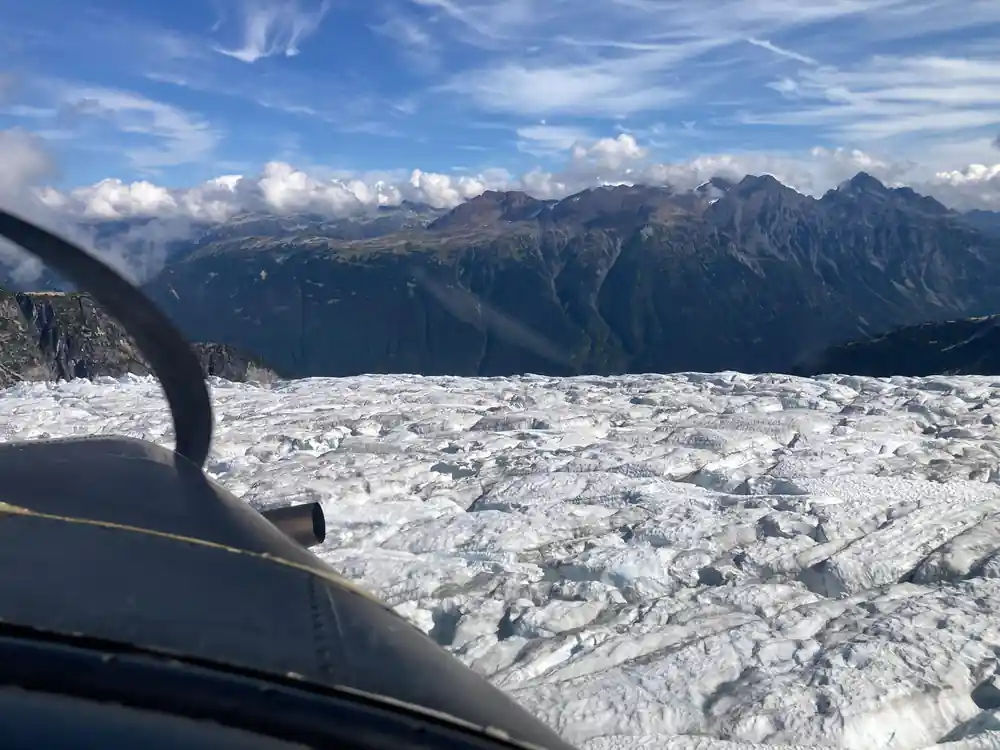
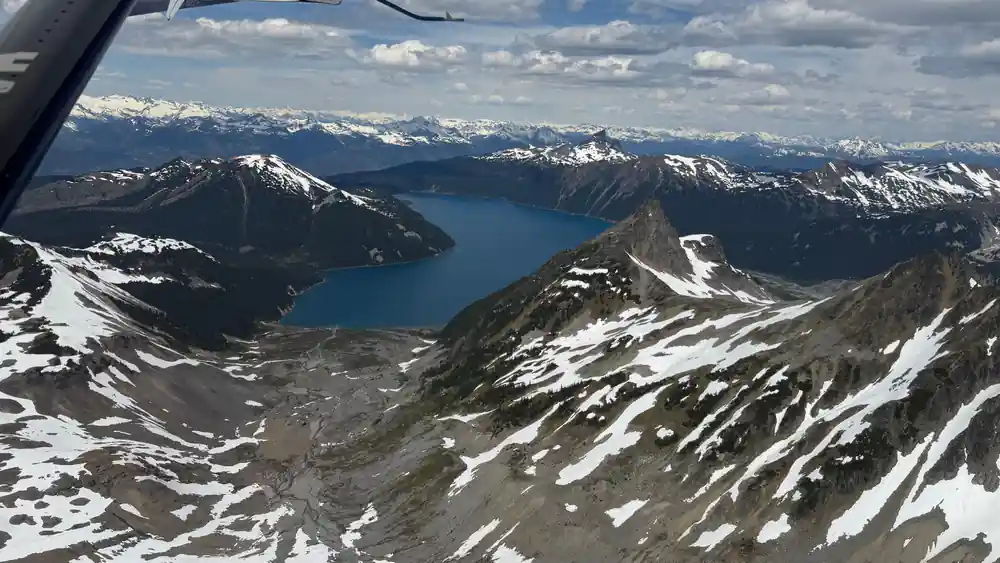
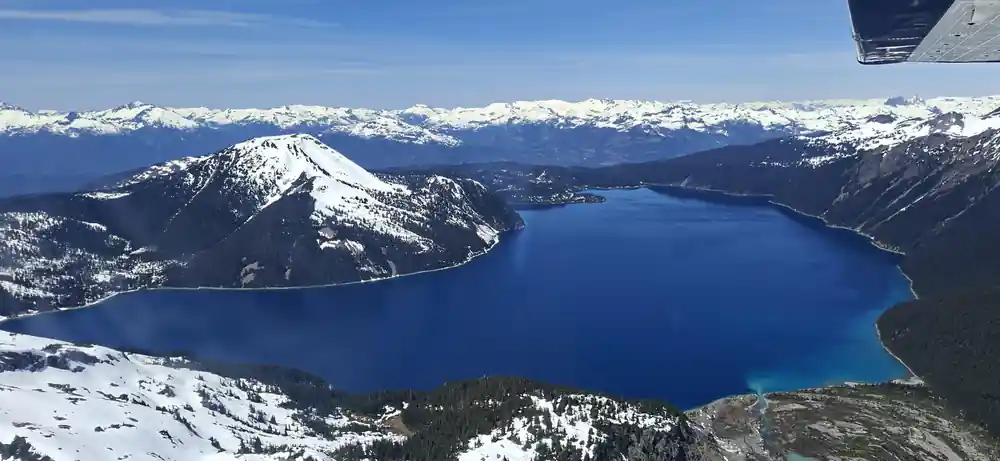
From the terminal, Garibaldi Lake lies about 24 kilometres away in a straight line, and the Black Tusk about 20 kilometres away; the lake and the Tusk are themselves only about 4 kilometres apart. A short flight covers ground that would otherwise be several separate destinations, and it puts the lake, the Barrier and the Tusk into a single unbroken view that no single point on the ground offers.
The Black Tusk stands out even from a distance: a dark spire of rock with steep sides, all that is left of a volcano worn down over a long time, and something drivers notice from far off along the Sea to Sky highway. From above, it appears alongside the turquoise lake and the rock wall of the Barrier in one frame, a combination the trail never offers all at once, since walking to any one of them means leaving the others out of sight.
What the trail gives you that the flight cannot
Nothing about the flight replaces standing at the shore. On the ground you get the sound of the water, the shade of the trees, the scale of the Barrier rising directly above you, and as much time there as you choose to spend. None of that is visible from a cabin window at altitude, where the lake becomes a shape below rather than a place to stand in.
Reaching it takes the long uphill hike from Rubble Creek, with no road to shorten it. Anyone who wants the shore itself, rather than the view of it, has to walk there; there is no way to fly in and still get that particular experience, and no way to drive any part of the distance. It is effort swapped for proximity, and no route offers both at once.
Which one suits a short visit to Whistler
A short visit leaves little room for a long uphill hike with no road at any point along it. The flight fits into a single outing of about thirty minutes and returns to the same dock it left from, which makes it the option that works inside a tight schedule without giving up the sight of the lake and the Tusk altogether. Less time on the ground, more ground covered, is the decision in miniature.
A longer visit can fit the hike instead, or both: the flight for the basin, the Barrier and the Black Tusk seen together, and the trail for the shore itself. Neither one is a substitute for the other; they show a different part of the same place, and choosing between them is really a choice about how much time and effort a visit has to spare.
See Garibaldi Lake and the Black Tusk from the Air
from US$207Reserve now & pay later