Quick summary
- The plane accelerates across Green Lake rather than down a runway, so the run feels bumpy at first and then goes suddenly smooth as the floats lift clear of the water.
- It's a small aircraft, nothing like a commercial jet inside, with a single narrow cabin that keeps the view close on both sides of your seat.
- The loop out over Garibaldi Lake and the Black Tusk takes about 30 minutes in the air before the plane turns back toward Whistler.
- The float plane sets back down on Green Lake the same way it left, gliding onto the surface rather than touching down on tarmac.
What a float plane actually is
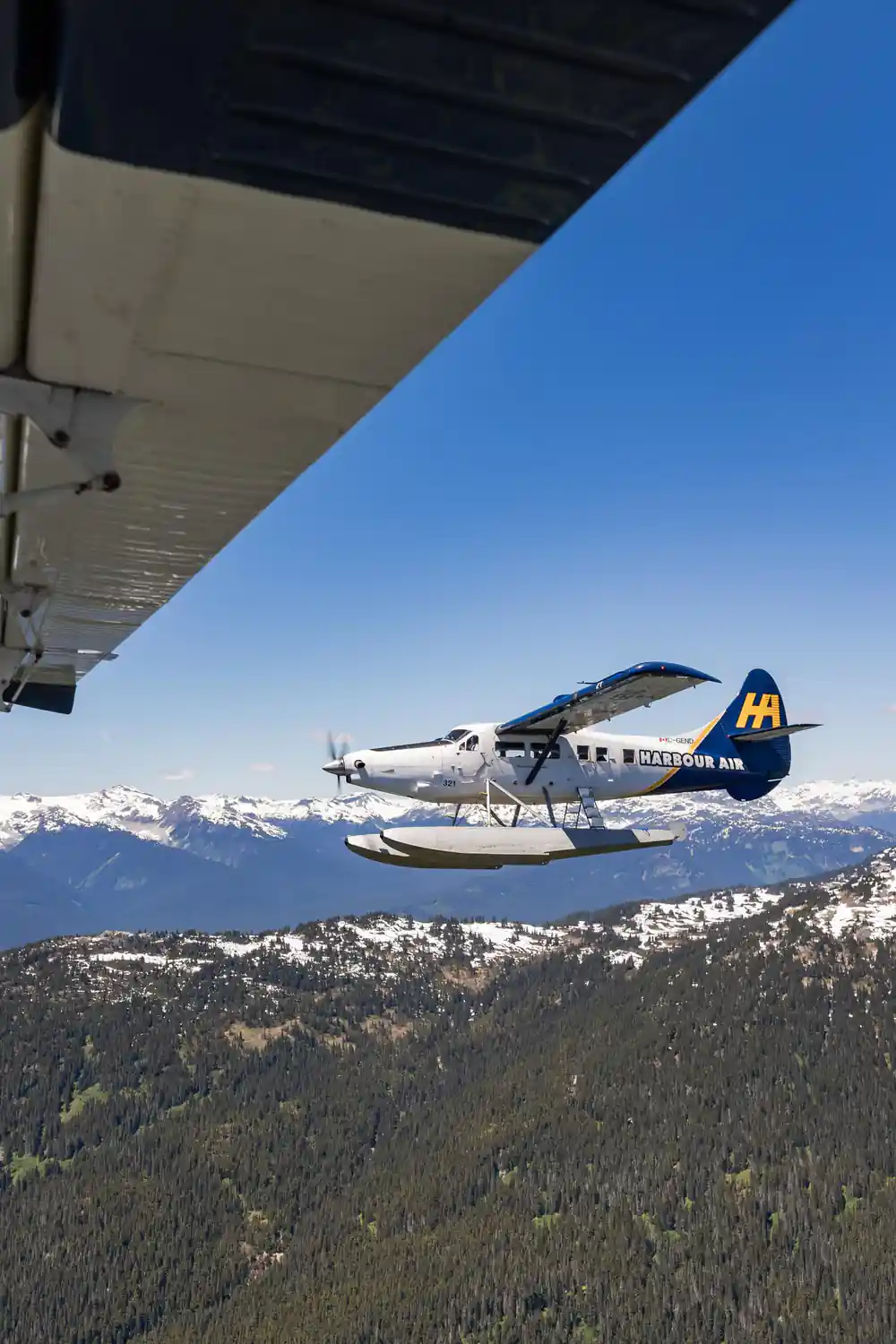
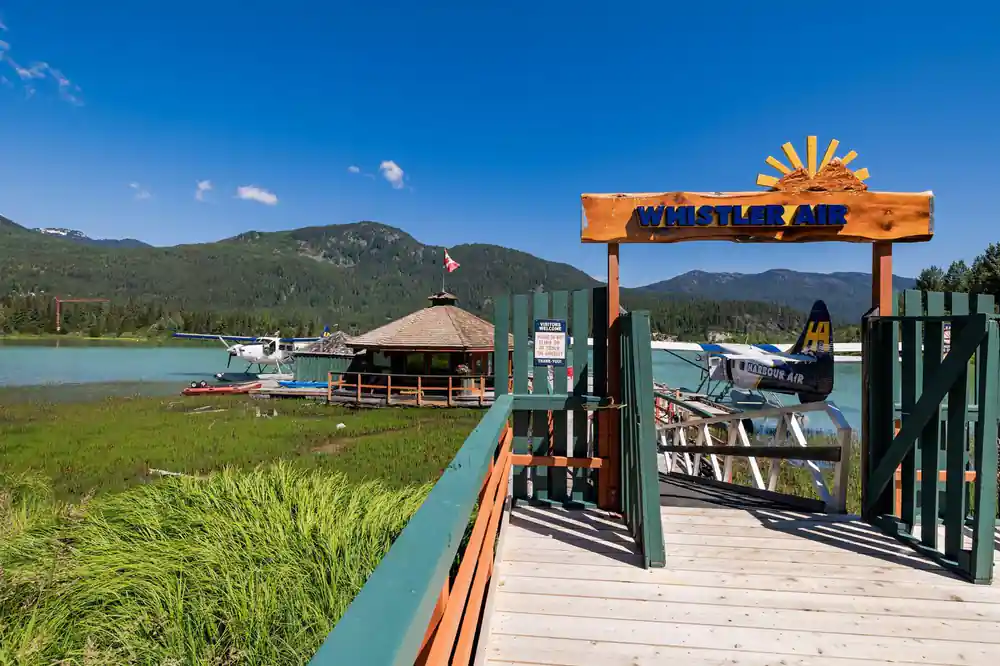
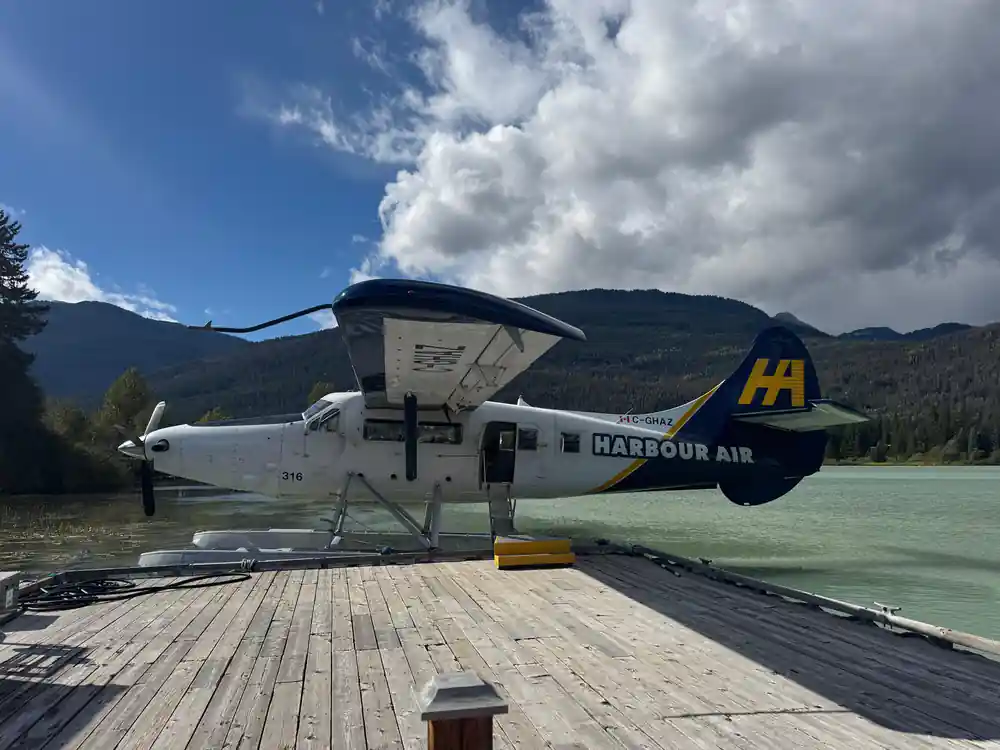
A float plane is a small aircraft built to take off and land on water instead of a runway. In place of wheels it sits on two long floats, called pontoons, that let it rest on a lake surface the way a boat does with the engine off. The Whistler flight uses a float plane operated by Harbour Air, based on Green Lake rather than at an airport.
This is not a scheduled flight between cities. It's a sightseeing loop: the plane leaves Green Lake, flies out over Garibaldi Provincial Park, and comes back to the same stretch of water it left from. Harbour Air also runs scheduled seaplane routes between Vancouver, Victoria and Whistler, but this flight is not one of them. It exists to show you the country from above and nothing more.
The take-off run across the water
Taking off from a lake does not feel like taking off from a runway. The plane taxis out onto open water, turns into the wind, and opens the throttle. For the first stretch you feel every ripple on the lake through the floats, a rougher ride than tarmac gives you, and the engine noise builds as the plane picks up speed across the surface.
The bumping stops the moment the floats break free of the water. There's a clear change in motion: the shaking cuts out and the ride goes smooth within a second or two, which is the plainest signal that you're airborne rather than just moving fast. From there the plane climbs steadily away from Green Lake and the golf course beside it.
Inside a small aircraft cabin
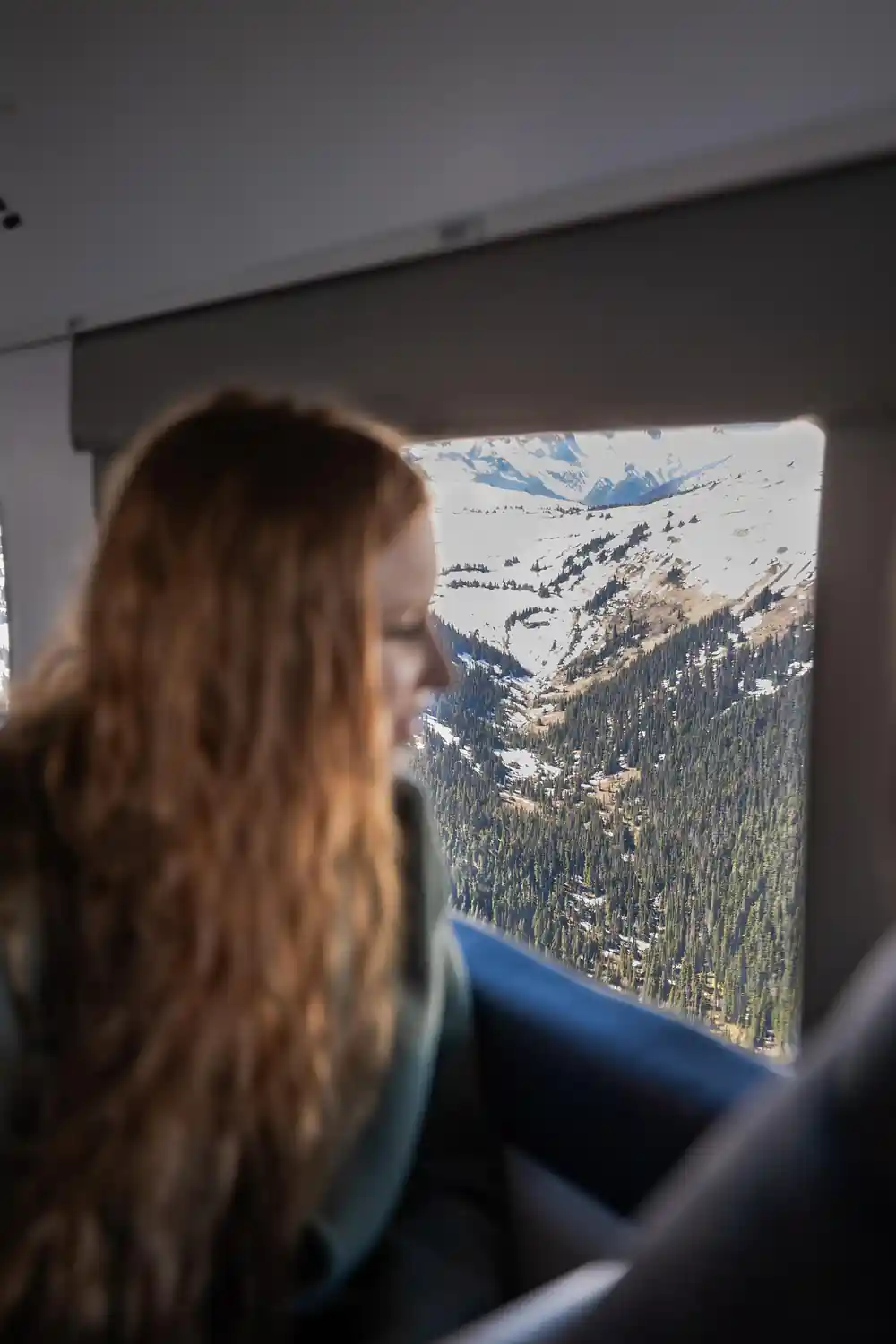
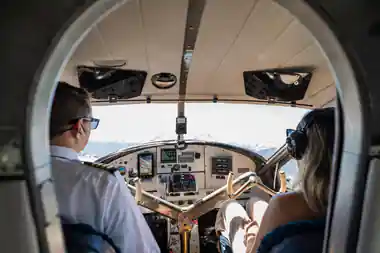
This is a small aircraft, not a commercial jet, and the cabin reflects it. There's a single narrow cabin rather than rows split by an aisle, and the walls and ceiling sit close enough that you notice the aircraft's size for the whole flight. Small cabins like this put every passenger nearer the windows than an airliner ever does, simply because there's less cabin between a seat and the glass.
Exactly how the seats are arranged depends on the aircraft Harbour Air assigns to your flight, so it isn't something to plan around in advance. What holds true regardless of the layout is the view: the windows sit low and close, and because the cabin is so narrow the scenery on the other side of the plane is never far from your own seat either.
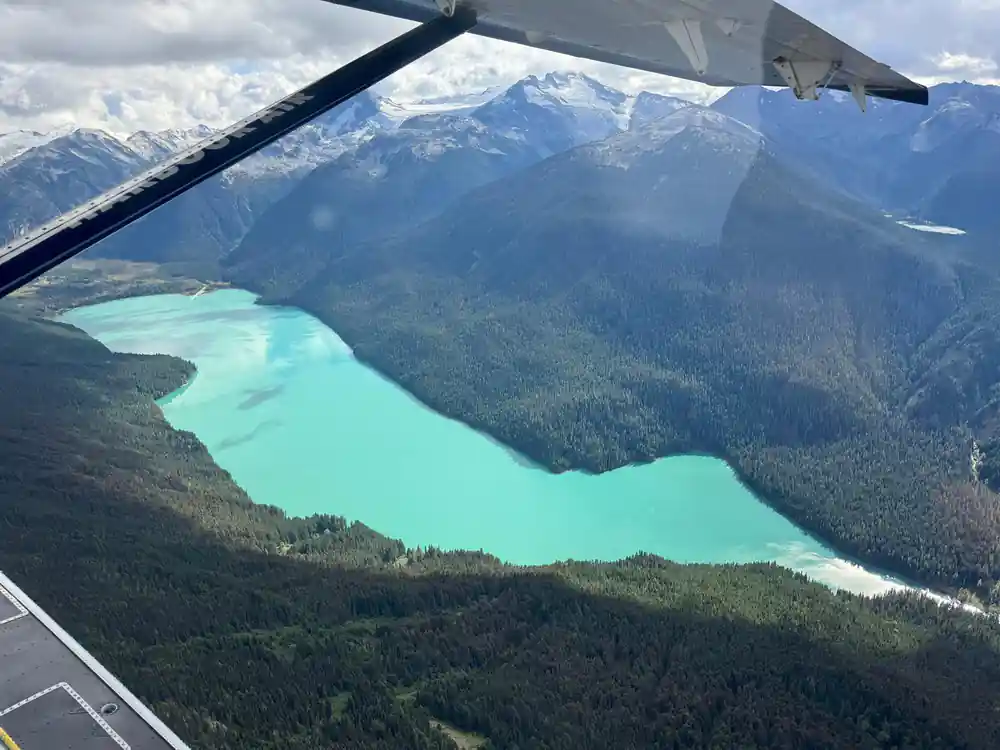
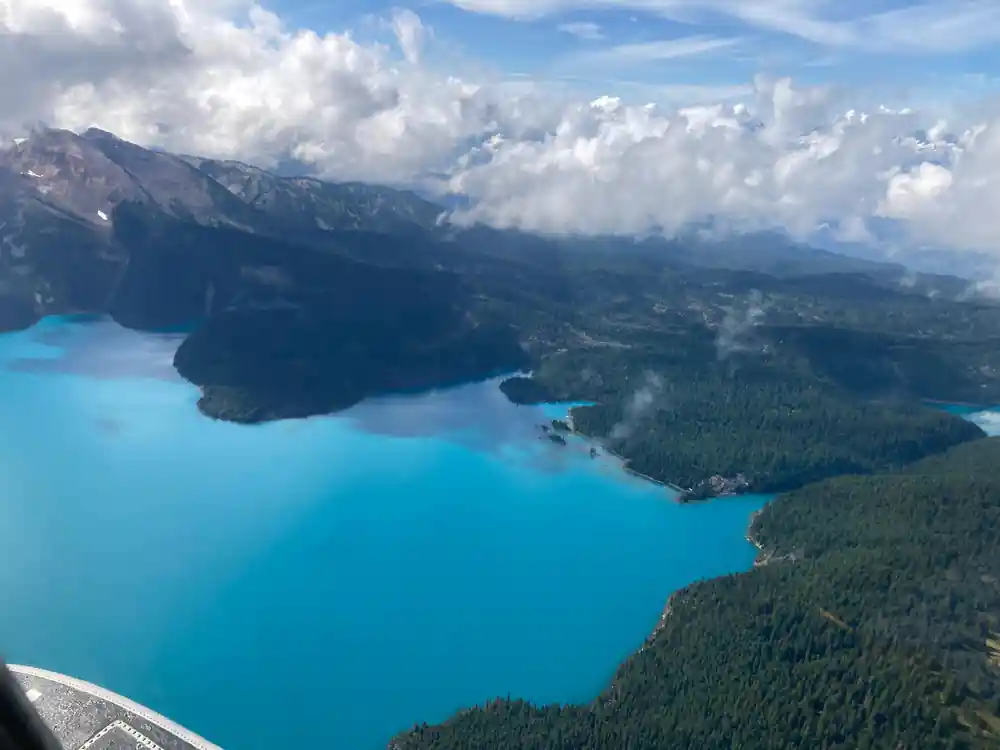
Garibaldi Lake's turquoise water, seen from the float plane's cruising height.
The noise and the ride once airborne
A float plane like this is powered by a propeller engine, and that engine sits close to the cabin without a jet's insulation around it. Expect a steady drone for the whole 30 minutes, loud enough that talking across the cabin usually means raising your voice rather than speaking normally.
Away from the take-off run itself, the flight tends to be steadier than the first minute suggests. Once the plane has climbed to height it settles into level flight for the loop over Garibaldi Lake and the Black Tusk, with the occasional dip or bank as the pilot turns for a better angle on the scenery below.
What you'll see over Garibaldi country
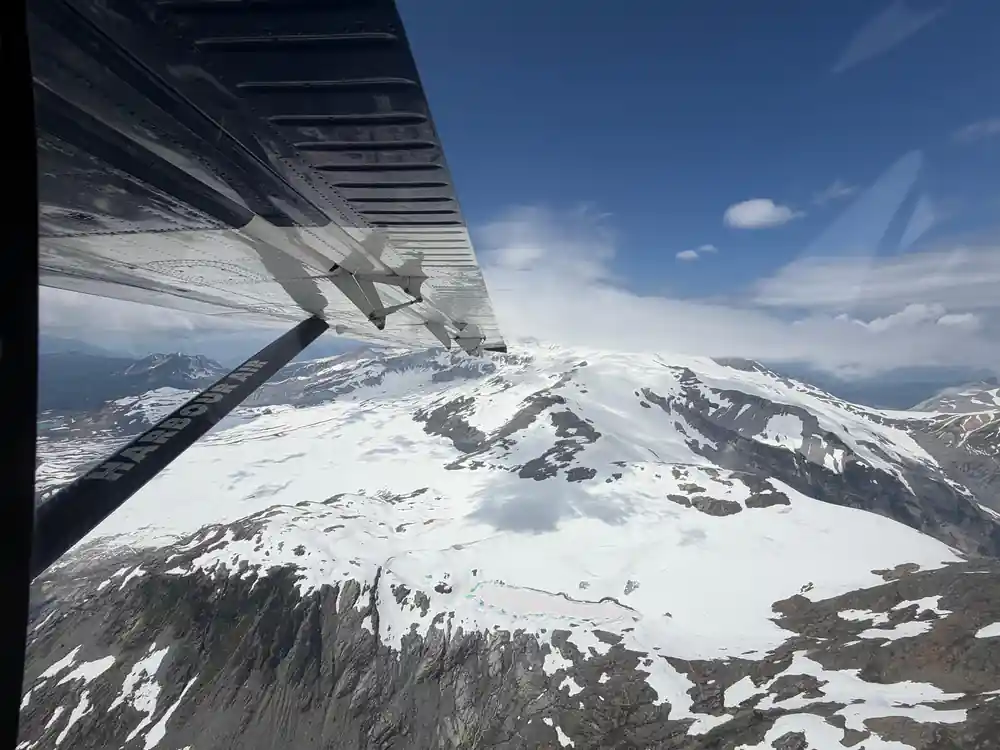
The loop takes you out over Garibaldi Provincial Park, in the Coast Mountains north of Whistler. Garibaldi Lake sits about 24 km from the terminal in a straight line, and its water is a strong turquoise blue, held in its basin behind a wall of volcanic rock known as the Barrier.
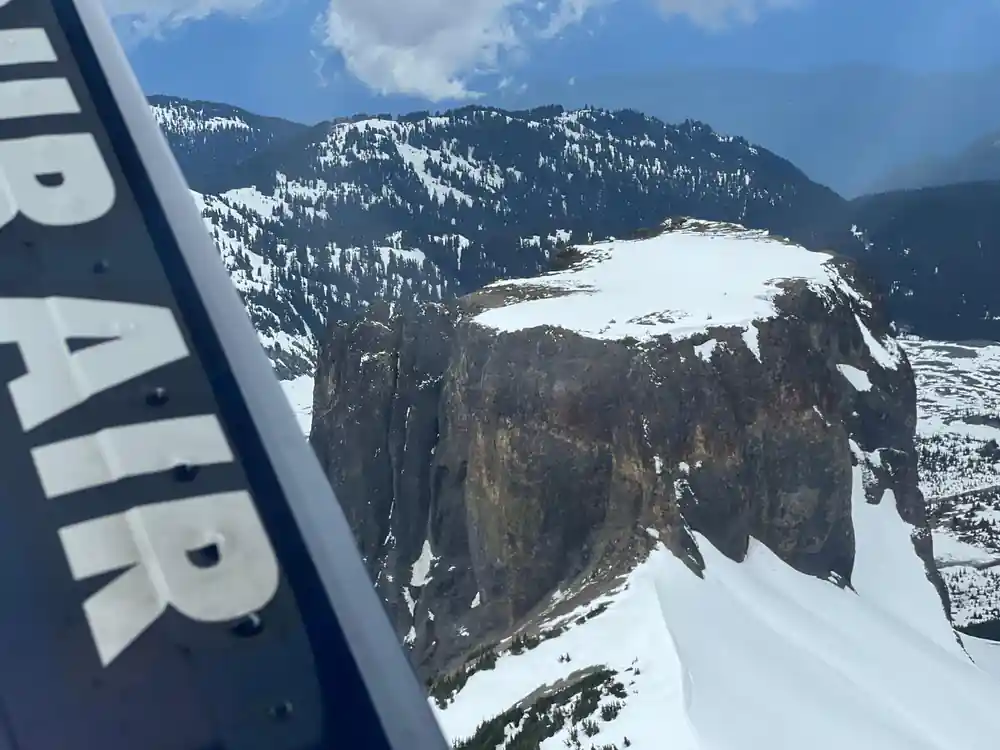
From there the plane passes near the Black Tusk, a dark, steep-sided pinnacle of volcanic rock that is the eroded remnant of an old volcano and stays visible from a long way along the Sea to Sky corridor. The Tusk sits about 20 km from the terminal and only around 4 km from Garibaldi Lake itself, so the two appear close together from the air even though reaching either on foot is a long walk.
On the ground, the only way to reach Garibaldi Lake is a long uphill hike from the Rubble Creek trailhead; there's no road to the lake itself. Seeing it from the float plane in half an hour is a genuinely different way to take in the same view a hiker earns much more slowly.
Landing back on Green Lake
The flight ends the way it started: back on the water, at the same stretch of Green Lake beside the Nicklaus North golf course. The plane descends in a wide turn, lines up with a clear run of open lake, and settles onto the surface in a controlled version of the same motion you felt on the way out, minus the initial acceleration.
Once the floats are down, the plane taxis back to the Harbour Air terminal at its own pace rather than braking hard the way a wheeled aircraft does on a runway. The whole flight, take-off to taxiing back to the dock, is built around that 30-minute loop rather than a longer transfer somewhere else.
Checking in, and who this flight suits
Check-in is at the Harbour Air front counter at the terminal on Green Lake, 8069 Nicklaus North Boulevard in Whistler, and the advice is to arrive at least 40 minutes before your flight time. Bring a passport or another form of photo ID; it's on the list of what you need at check-in.
This flight is listed as not suitable for people with mobility impairments, so it's worth checking your own situation against that before booking rather than after arriving at the terminal. If you have questions about weight limits, baggage, or anything else specific to your flight, the Harbour Air team can answer that when you book.
See dates for the Whistler float plane flight
from US$207Reserve now & pay later
Good to know first
What is a float plane?
How long is the flight?
Where does the flight leave from?
How early should I arrive for check-in?
What do I need to bring?
Is the flight suitable for limited mobility?
Is the float plane noisy inside?
How many seats does the plane have?
The flight, step by step
Check in at the terminal
Arrive at the Harbour Air front counter on Green Lake at least 40 minutes before your flight time.
Board at the dock
Walk out to the float plane tied up at the dock and take your seat inside the cabin.
Take off across the water
The plane taxis into position, opens the throttle, and runs across Green Lake before lifting off the surface.
Fly the loop to Garibaldi country
About 30 minutes in the air over Garibaldi Lake and the Black Tusk before the plane turns back.
Land back on Green Lake
The plane settles back onto the water at the same terminal it left from.