Quick summary
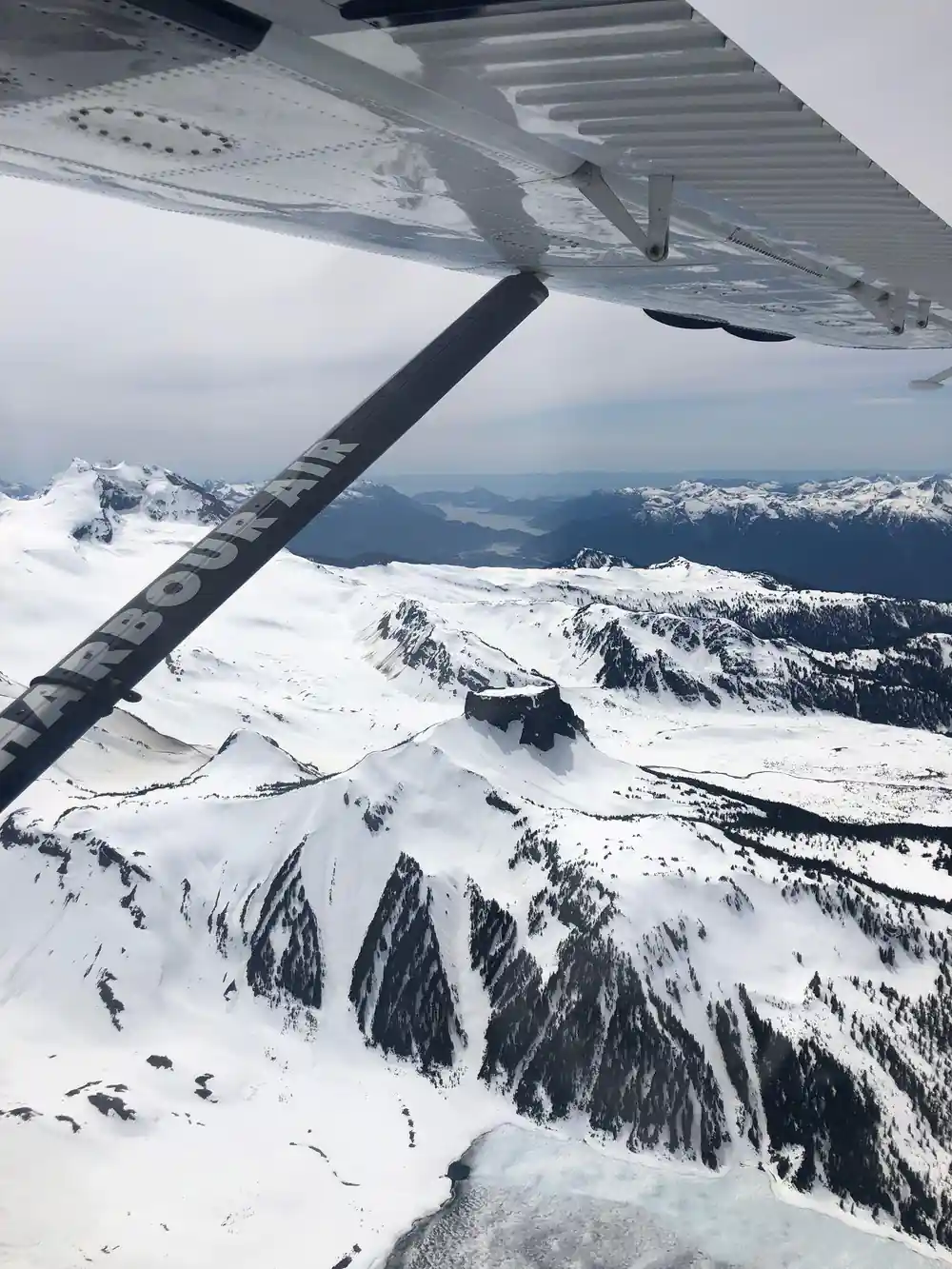
- A dark, steep-sided pinnacle of volcanic rock rises above the Garibaldi area, the standing remnant of an eroded volcano.
- Black Tusk stands about 4 km from Garibaldi Lake and about 20 km from the seaplane terminal, both measured in a straight line.
- Hikers reach the area on a long uphill trail from the Rubble Creek trailhead. There is no road to the lake or the spire.
- A Harbour Air seaplane loop passes both the lake and the spire in about 30 minutes, taking off and landing on the same water.
A Dark Spire Above Garibaldi Lake
The Black Tusk is a dark, steep-sided pinnacle of volcanic rock standing above the Garibaldi area in the Coast Mountains of British Columbia. It is visible from a long way along the Sea to Sky corridor, rising clear of the ridgelines around it long before a hiker or a driver gets close.
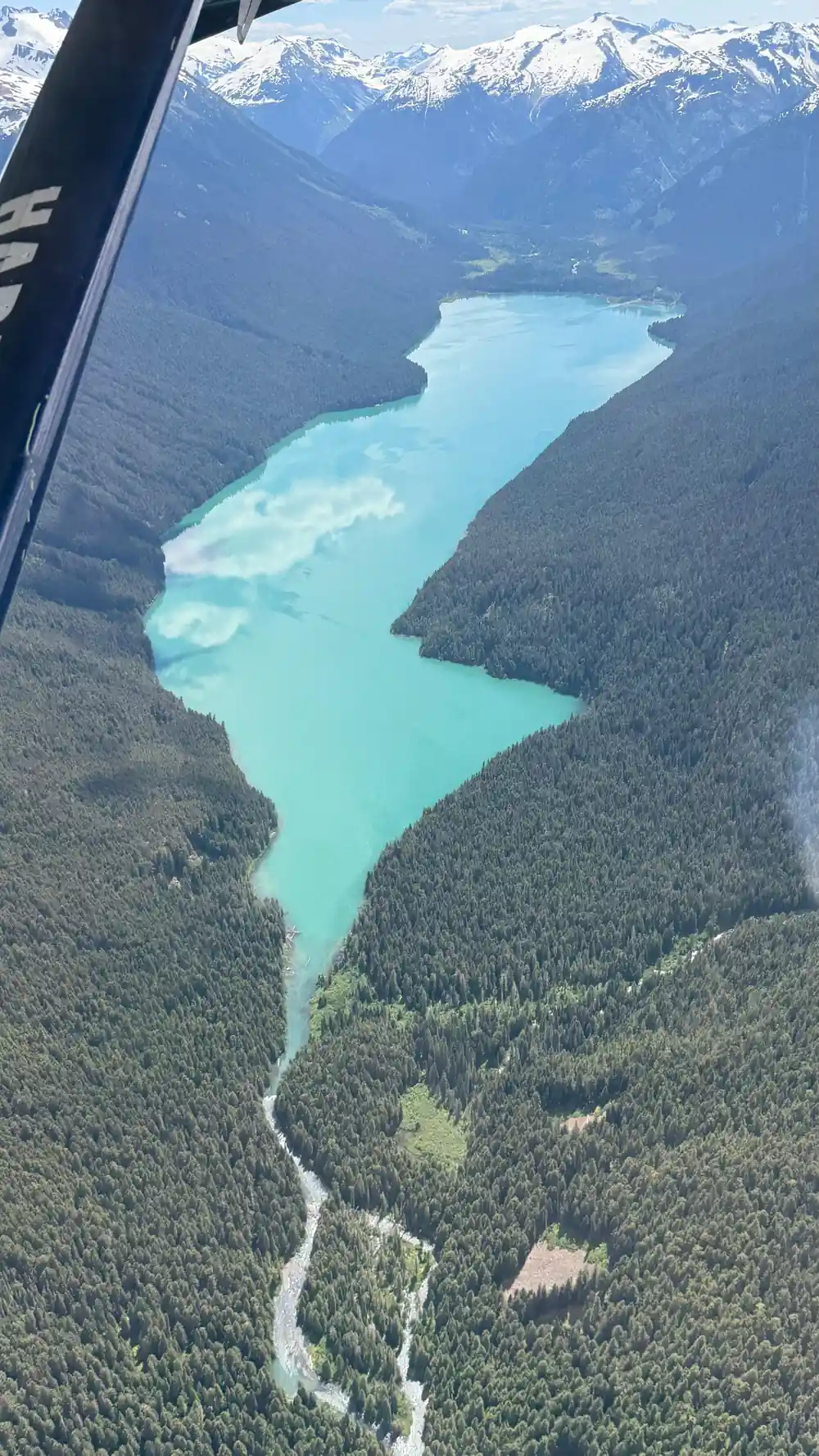
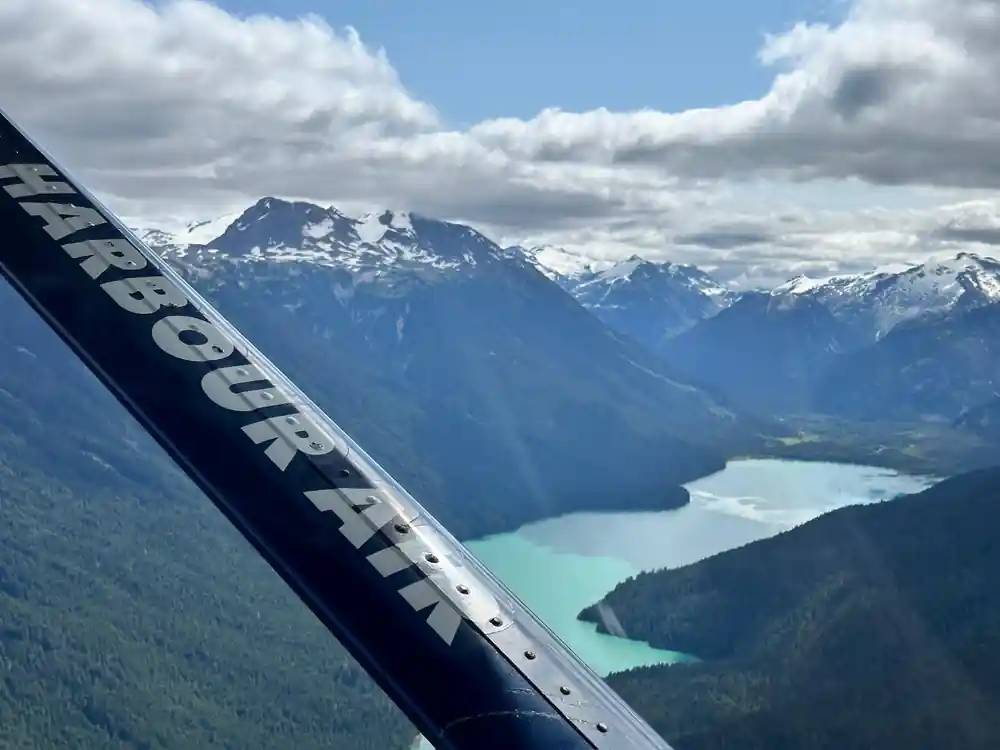
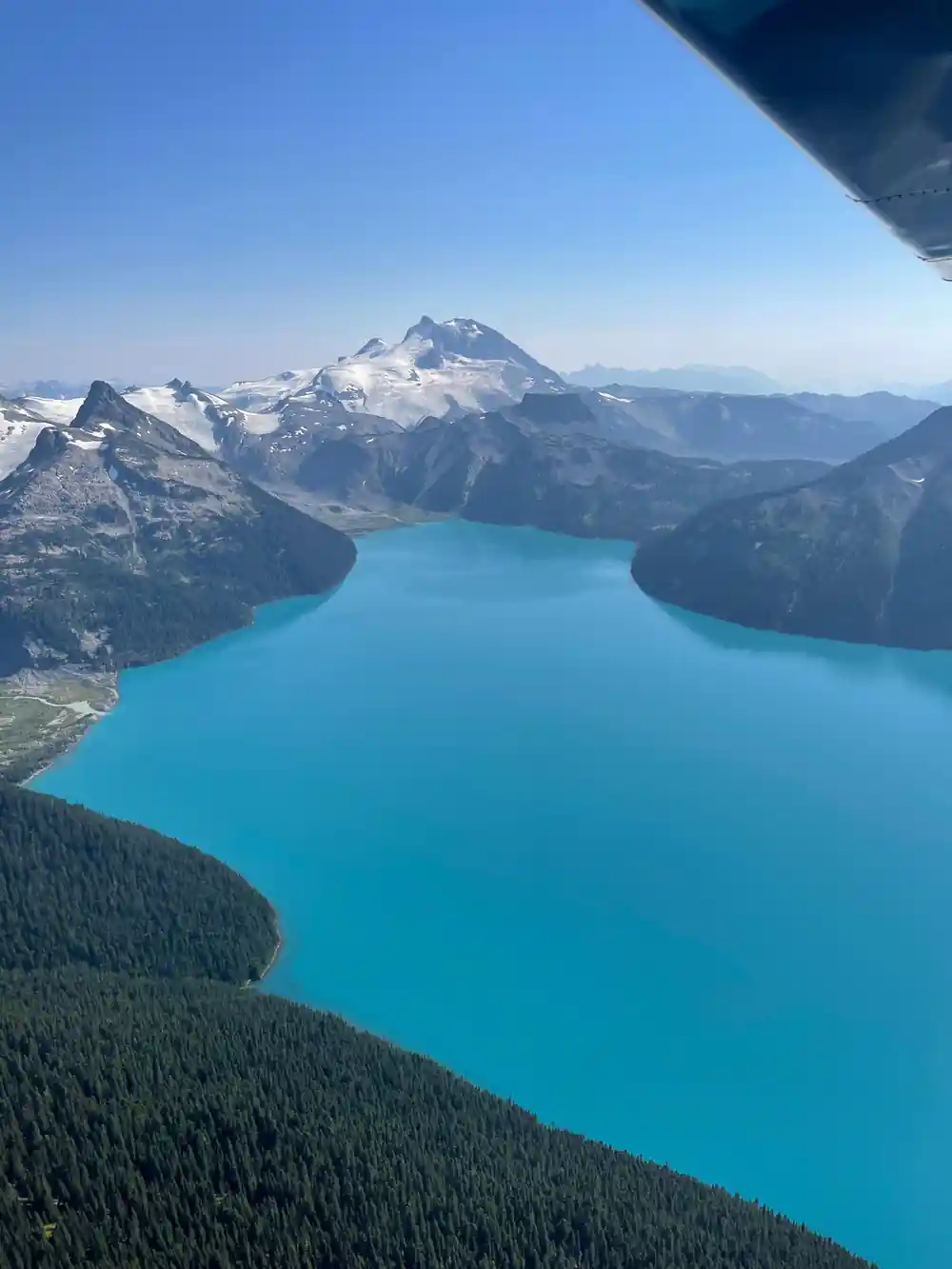
Garibaldi Lake lies nearby inside Garibaldi Provincial Park. Its water runs a strong turquoise blue, and it sits in its basin behind a wall of volcanic rock known as the Barrier. The lake and the spire are close enough together that a single seaplane loop can show both in one pass.
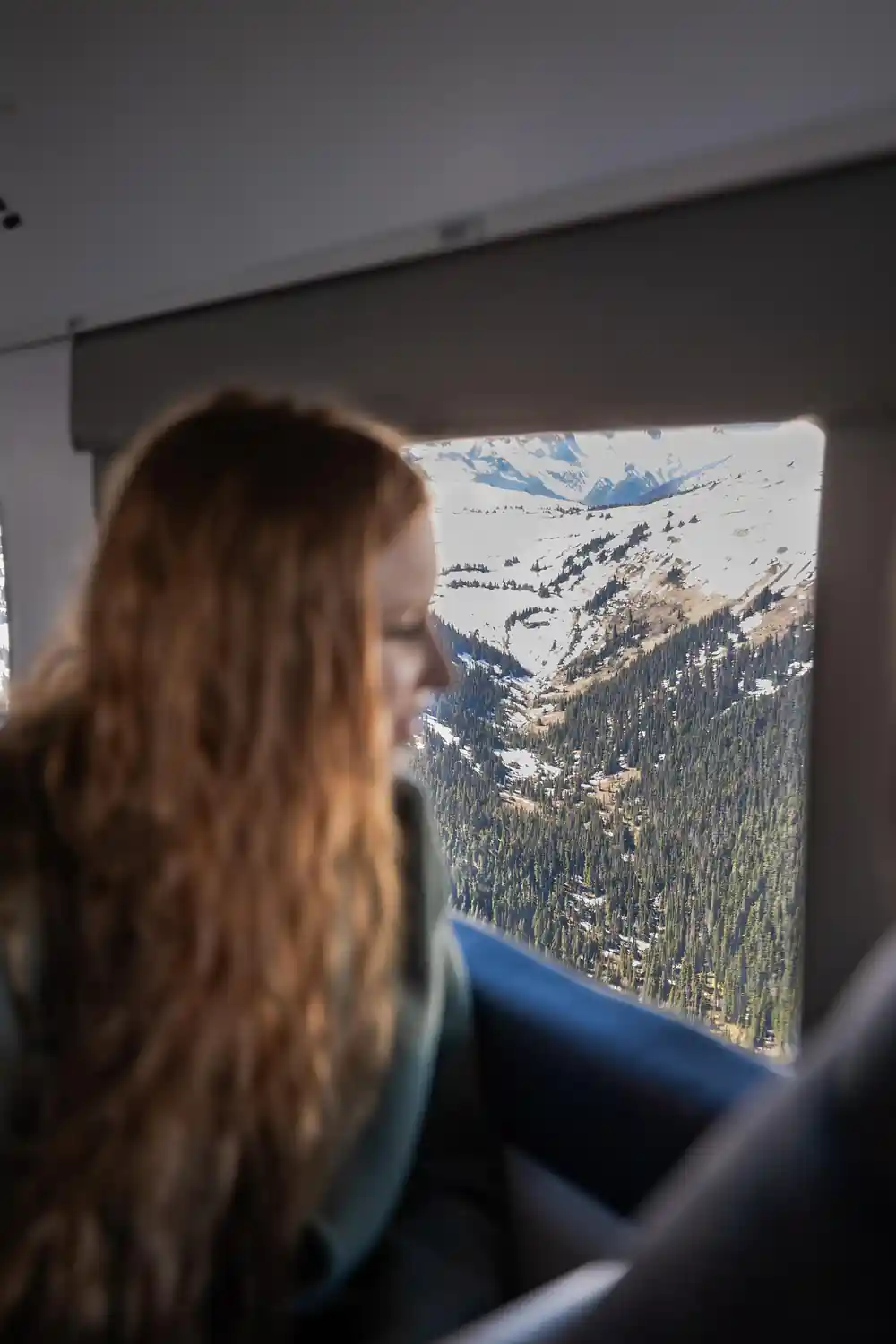
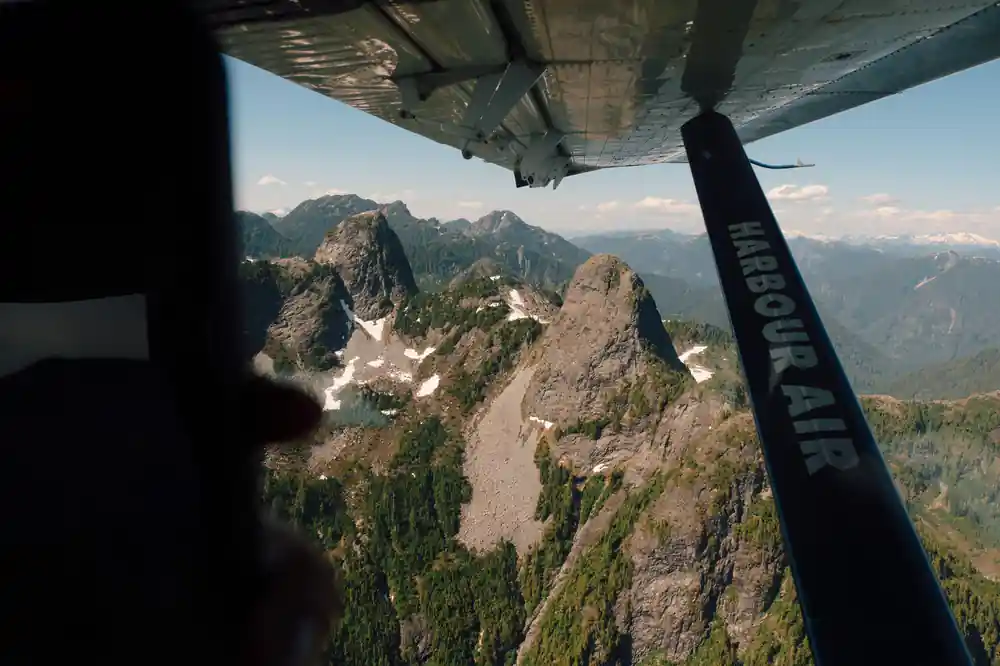
From a plane window, the ridgelines of the Coast Mountains fall away in every direction, and the Black Tusk stands apart from them by colour as much as by shape, dark rock against the grey and green slopes nearby. On the ground, the same spire is often the first landmark a traveller learns to pick out along the Sea to Sky corridor.
The Eroded Remnant of a Volcano
The Black Tusk is the eroded remnant of a volcano rather than an active cone. What a visitor sees today is what remained once the material around the original volcano wore away, leaving only the harder rock at its core standing on its own.
A plug of this kind forms from rock that cooled and set hard inside a volcano, while softer material built up around it. Over time it is the softer rock that erosion strips away first. Once enough of it has gone, the hard core is left standing alone, narrower than anything that used to surround it. That is the shape a plane passenger sees today: a spire rather than a slope.
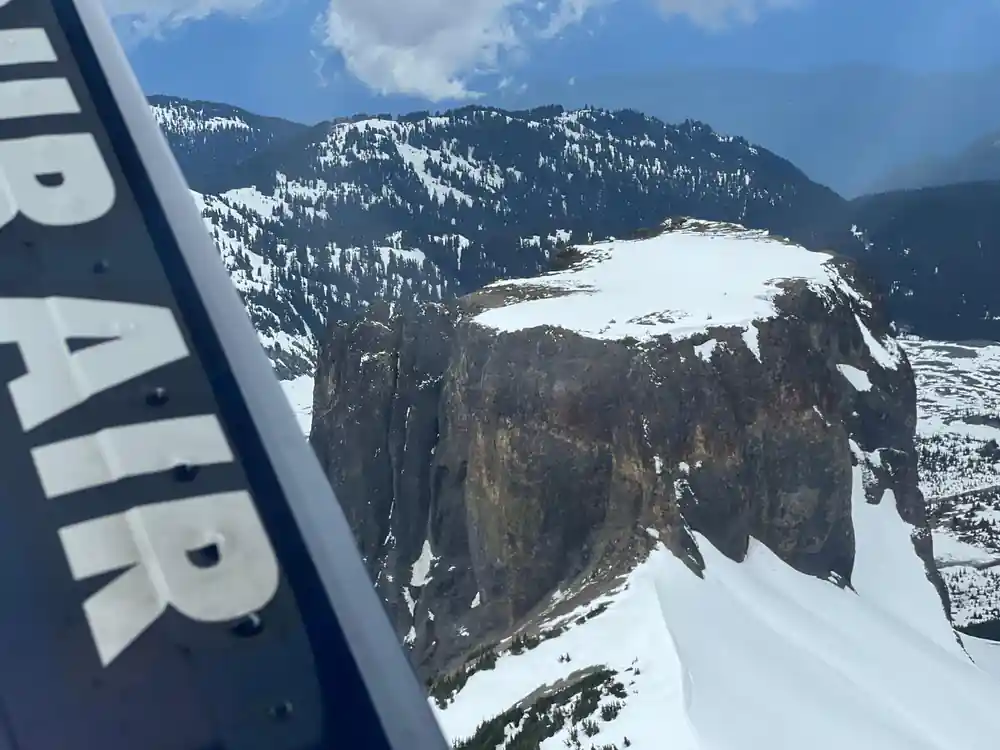
The Black Tusk's dark spire rises above Garibaldi Lake's turquoise water.
A Scrambling Objective on Foot
On the ground, the Black Tusk is a scrambling objective for hikers, reached after a long approach through the Garibaldi backcountry. Seeing it from a seaplane is a different way of taking it in, from above rather than from below.
Getting anywhere near the area on foot starts with a long uphill hike from the Rubble Creek trailhead. There is no road to Garibaldi Lake itself, and none to the Black Tusk either. Reaching either on the ground means walking in on foot, and reaching both together in one short outing means going by air instead.
Most people who ever see the Black Tusk do so from a distance: from the Sea to Sky highway, from the meadows around Garibaldi Lake, or from a neighbouring summit. Far fewer see it from directly above, which is the vantage a seaplane passenger gets instead of the ground-level view most travellers know.
Between the Lake and the Terminal
The Black Tusk stands about 4 km from Garibaldi Lake, close enough that both sit inside the same view from height. From the Harbour Air terminal on Green Lake in Whistler, the spire is about 20 km away in a straight line.
Those figures are air distances between the mapped points, the measure that matters for a flight rather than for a hike. A seaplane climbing out of Whistler covers that ground in minutes, tracing a loop that brings the lake and the spire together in the same short flight before returning to the water it left from.
4 km
The straight-line distance between Garibaldi Lake and the Black Tusk, both visible together on the same seaplane loop.
Garibaldi Lake, Seen Together With the Spire
Garibaldi Lake is held in its basin by the Barrier, a wall of volcanic rock that keeps its turquoise water in place. The lake sits in Garibaldi Provincial Park in the Coast Mountains, with the Black Tusk standing above the wider area around it.
From the ground, the two are separated by a long uphill hike with no road to either one. From the air, they appear together within the same loop, the lake's colour set against the dark rock of the spire beyond it.
The View From the Seaplane
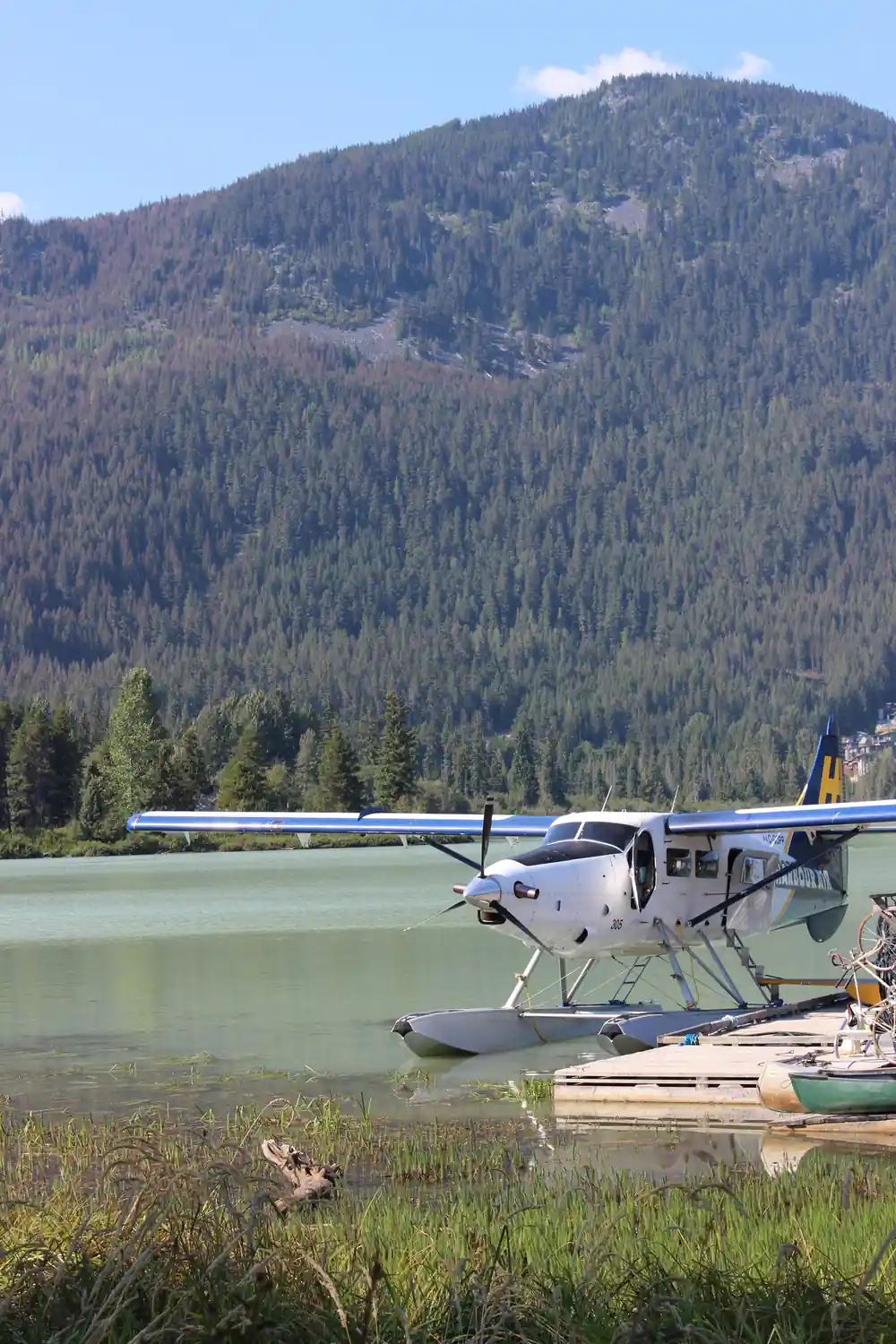
The flight is a scenic seaplane loop run by Harbour Air out of Whistler, taking off from the water at the terminal on Green Lake beside the Nicklaus North golf course and landing back on the same water about 30 minutes later. It is a sightseeing flight rather than a transfer: it ends where it started.
Passengers check in at the Harbour Air front counter at least 40 minutes before the flight time. The loop takes in Garibaldi Lake and the Black Tusk from height, a view of both together that no trail up from Rubble Creek can offer, since there is no path that reaches a vantage point like this one.
The aircraft is a small floatplane, built to take off and land on open water rather than on a runway. Passengers board from the dock at the terminal on Green Lake, and the flight follows a loop rather than a straight line out to a single destination, which is what lets it show the lake and the spire on the same short trip.
A Sightseeing Loop, Not a Transfer
Harbour Air also runs scheduled seaplane services between Vancouver, Victoria and Whistler. Those flights are transport between cities, timetabled like any other route. The flight over Garibaldi Lake and the Black Tusk is not one of them.
It is a sightseeing flight that takes off from the water at Green Lake, flies its loop over the lake and the spire, and lands back on the same water it left from. The aircraft does not continue on anywhere else once it touches down again.
See Garibaldi Lake and the Black Tusk From the Air
from US$207Reserve now & pay later